Mid-Century Modern Wall Art: The Look, and Prompts to Get It
Mid-century modern never really left. Walnut, tapered legs, clean lines, warm color, it is the most durable design language in American homes, which makes it one of the safest, and most satisfying, looks to put on a wall.
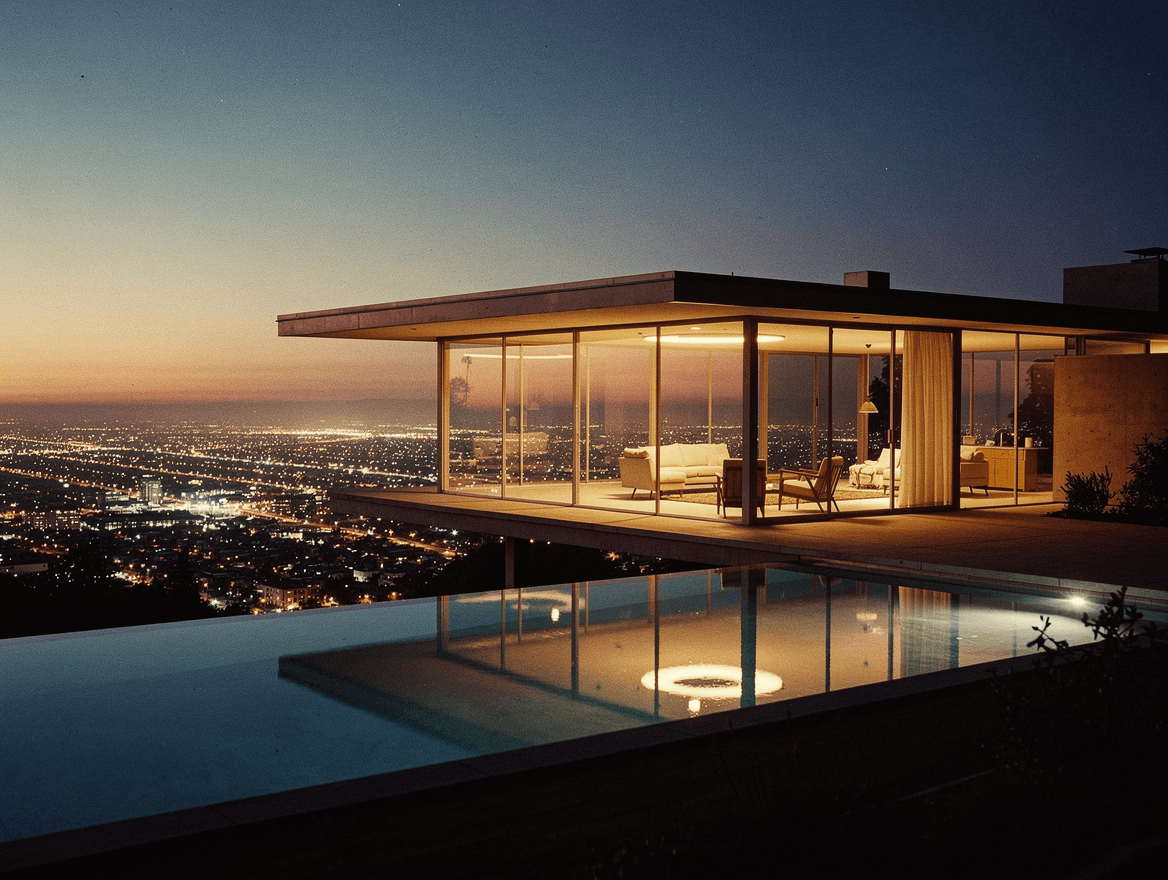
The look, and where it came from
Mid-Century Modern is the optimistic design language of the postwar years, roughly 1945 to the late 1960s: clean lines, big glass, indoor-outdoor living, and a faith that good design could be for everyone.
Its most famous image almost never existed. The Stahl House, architect Pierre Koenig's glass box cantilevered over the Hollywood Hills, sat on a lot so steep that banks refused to finance it. In 1960 the photographer Julius Shulman shot two women sitting in that glass corner as the entire grid of Los Angeles glittered below. The picture more or less sold the world on California modernism in a single frame, and it is still the template for the look.
Why it works on a wall
- It matches furniture you already own. Walnut tones, warm neutrals, and a graphic edge sit naturally with the tapered-leg, mid-century-revival pieces that fill modern homes.
- It is warm without being fussy. The palette is inviting and the shapes are clean, so a piece adds character without clutter.
- It reads as designed. Whether it is an architectural photo or a flat geometric print, MCM looks intentional, the opposite of a generic poster.
Where it works in a home
Above a credenza or sideboard is the classic spot, the long horizontal furniture and a clean print were made for each other. A larger architectural piece anchors a living room well, and a flat geometric print brings warmth to a home office. (For how big to go in each spot, see the wall art sizing guide.)
Prompts to try
MCM splits into two looks: warm architectural photography and flat graphic design. Both work; pick the one that fits your room and paste it into the studio.
The architecture shotA vintage film photograph of a mid-century modern glass and steel house in the style of Pierre Koenig, cantilevered over a Los Angeles hillside at dusk, warm interior light through floor-to-ceiling glass, a clean rectilinear pool, city lights spreading below, soft film grain, faded vintage color
Geometric, graphicA mid-century modern geometric composition, interlocking ovals, arches, and starbursts in mustard, burnt orange, teal, and walnut brown on a warm cream ground, clean flat shapes, retro 1960s graphic, matte
Atomic-age abstractA retro atomic-age abstract in the spirit of mid-century textile design, thin black linework and floating boomerang shapes in olive, ochre, and rust on off-white, flat color, clean and graphic
Poolside nostalgiaA vintage 1960s color film photograph of a mid-century modern poolside scene, kidney-shaped pool, butterfly chairs, palm trees, warm sun-bleached Kodachrome color, soft grain, nostalgic and glamorous
Want the rest of the styles our AI handles well? The 10 art styles guide has all of them, each with a prompt. Then make the one that fits your room.